Table of contents
1. The attributive problem
In March 1918 the Editorial Group of the War Press Headquarters (abbr. KPQ) in Vienna entrusted infantry captain Robert Musil with the direction of a new soldier newspaper: Heimat.
The first issue of the magazine appeared on 7 March 1918, and the following 18 March Musil was formally assigned to the KPQ (Broucek 1989; Gschwandtner 2016: 436). Along with him, some of the major Austrian authors of the time had as well been recruited by the KPQ, and served as members of the Editorial Group.
Heimat had a circulation of about 31,000 copies and, after the success of the German edition, translations in Hungarian (Üzenet) and Czech (Domov) were also published. Each issue counted 4-8 pages and included political-propagandistic editorials, war news, columns and excerpts from literary texts. Apart from the latter, however, all articles were unsigned, and the identity of their authors is still uncertain. Even of the involvement of the KPQ there was no sign on the newspaper.
This is probably due to a deliberate communication strategy of the Austro-Hungarian army, aiming at enhancing the effectiveness of propaganda by exploiting anonymity to guarantee the newspaper’s authority as a collective entity (Gschwandtner 2013: 115). In this respect some scholars speak of a form of “double anonymity”: at the level of individual authors, who preferred to conceal their involvement with state propaganda, and at the level of the high commands, who sought to disguise the institutional ties of the newspaper, so that it could be perceived as an objective medium (Gschwandtner 2013: 116).
Musil scholars have tried to identify articles that could be attributed to the Austrian writer according to their contents and stylistic features (Corino 1987, 2003; Schaunig 2014; Libardi / Orlandi 2019), but the issue remained unresolved, also due to the lack of objective criteria to describe Musil’s style (Salgaro et al. 2019). Moreover, forms of “anonymous collective authorship” and “cooperative writing” have been hypothesized, in which single articles were written in compliance with the aims, methods, and contents explicitly set out by the military high commands (Schaunig 2009: 221).
2. The corpus
For our analyses, we used the 16 extant issues of Heimat digitized by the National Austrian Library and accessible on the ANNO database. A total of 84 articles were manually cleaned from OCR errors to constitute our test set.
Since most of the military records on the KPQ were systematically destroyed after the war (Gschwandtner 2013: 107), very little is known about the members of Heimat’s editorial group and its internal dynamics. Among the different names proposed by scholars as possible authors of the articles (Corino 1987: 76; Schaunig 2009: 220; Gschwandtner 2013: 109), besides Musil, we shortlisted three further candidates – F. Blei, E. Kisch, and A. P. Gütersloh, – whose collaboration in Heimat can be proven through both biographical and archival evidence (KA / Bd. 18: Vorkriegs- und Kriegskorrespondenz 1895-1918; Reichel 2016: 192–193; Hall 1981: 8–10). For each author we selected a corpus of works to be used as a training set for comparison with Heimat’s articles. More specifically, we chose excerpts of essayistic (KA / Bd. 12: Essays 1908-1914; 1918-1926; Blei 1930a, 1930b; Gütersloh 1991) and feuilletonistic prose (Kisch 1975a, 1975b, 1976), which allowed us to ensure a certain degree of genre-consistency. In order to further check the effectiveness of the different stylometric methods, then, we created for each author a development set of additional texts, all characterized by chronological, thematic, and stylistic proximity to Heimat’s articles (Kisch 1978: 388–400; Blei 1919a, 1919b; Gütersloh 1918a, 1918b), to which we added the only article of Heimat (“Politische Wochenschau—trau—wem?”, Heimat 4, 28.03.18: 1-2) explicitly attributed by Martha Musil to her husband (KA / Bd. 18: Vorkriegs- und Kriegskorrespondenz 1895-1918 / M. Musil und R. Musil an A. Marcovaldi, 29. März 1918).
All analyses were performed using the Stylo R package (Eder et al. 2016). All texts and scripts, together with details on the stylometric approaches, are available at the following link: <https://github.com/SimoneRebora/Heimat_stylometry> [09.05.2021].
3. Testing the stylometric methods
As the minimum length of the texts in our test set was 500 words (a threshold already set on a similar corpus by Rebora et al. 2019, and based on evidence by Stamatatos et al. 2015), we implemented the following verification procedure.
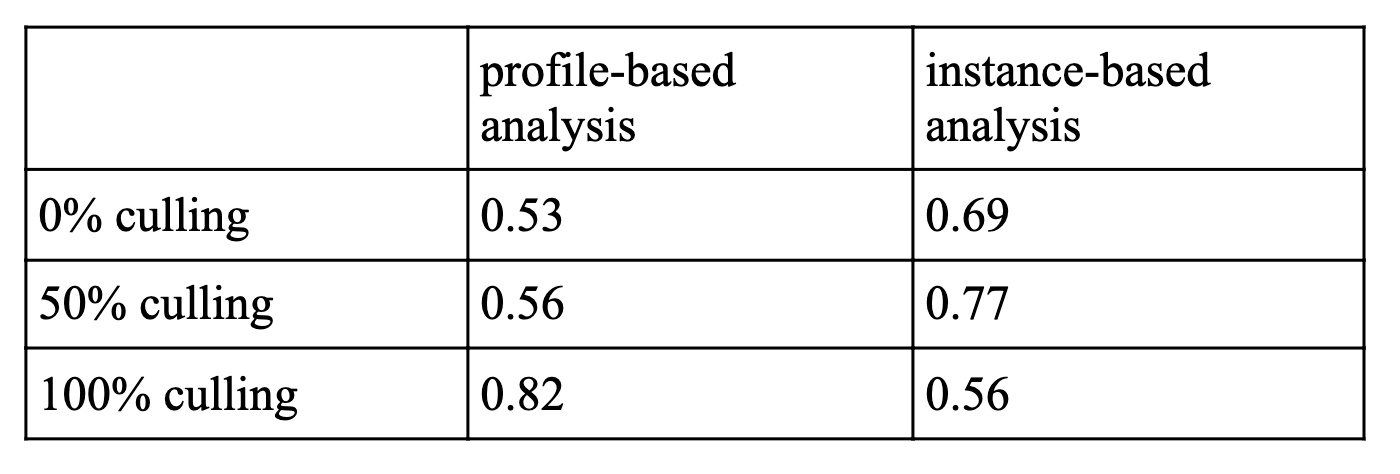
From the development set, we randomly extracted fifty 500-word-long passages for each author and tested on them a total of 1,540 stylometric approaches. A synthetic representation of the results is offered by Table 1, which shows how full culling (i.e., only words present in all texts are analysed) together with a “profile-based” approach (i.e. splitting the training set by author and not by text, cf. Stamatatos 2009) provides the best results. Thus, we decided to keep these two features constant and to vary the others (11 distance measures and 30 most frequent word selections). It should be noticed, however, that the approaches were not equally efficient on all authors: in particular, it was particularly difficult to identify Blei’s style, with accuracy scores 0.28 points below the mean. This confirms Eder’s (2017) suggestion, that certain authors “resist” the identification via stylometry, especially when working with short texts.
Table 1. Overview of attribution accuracy on the development set
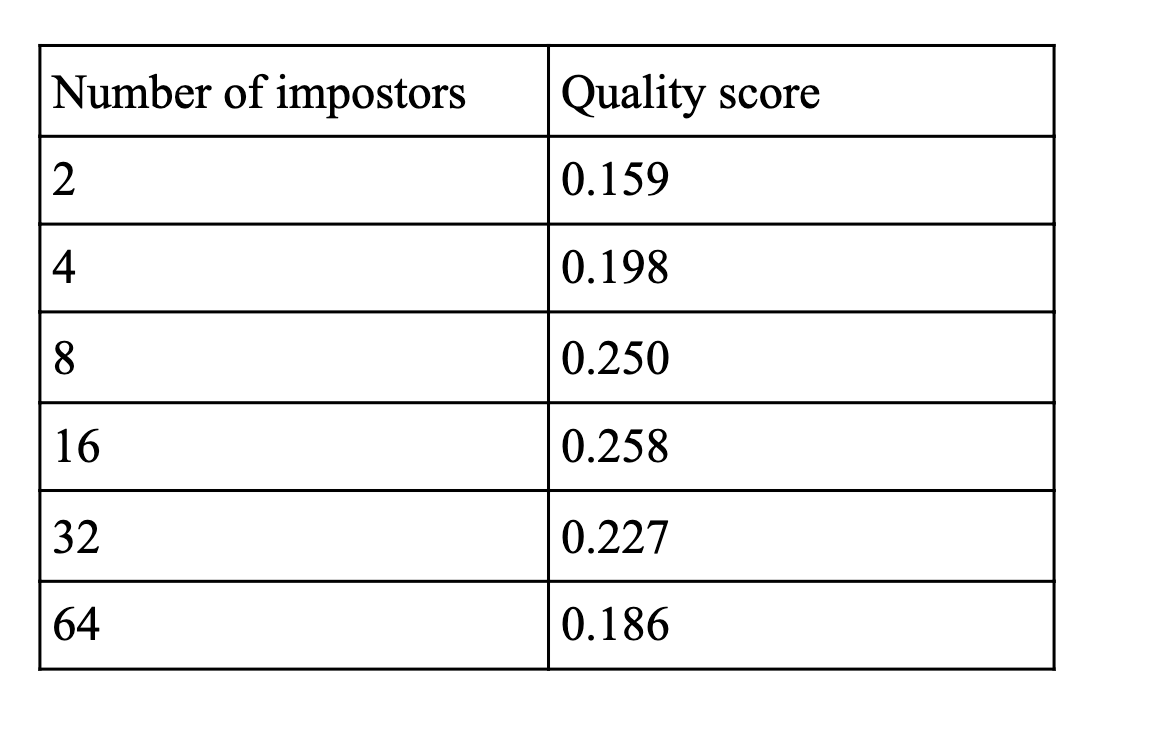
Since our list of candidate authors probably does not include all Heimat contributors, we also tested the “impostors method” (Koppel / Winter 2014), which uses additional candidates (who cannot have authored the texts under examination) as “distractors” in the stylometric analysis, in order to deny a frail attribution. To find the most suitable impostors we used the Kolimo corpus (Herrmann / Lauer 2017), which hosts the works of more than 500 authors active after the year 1890. The testing procedure was implemented as follows: for each author, (a) we used the impostors to verify the attribution of a passage written by him; (b) we used the impostors to deny the attribution of a passage not written by him. Both analyses produced a score between 0 and 1. To obtain a certain level of generalizability, the procedure was repeated ten times for each condition. A simple “quality score” was then calculated by subtracting a and b. As Table 2 shows, 16 is the best-performing number of impostors.
Table 2. Mean quality scores for the impostors procedure
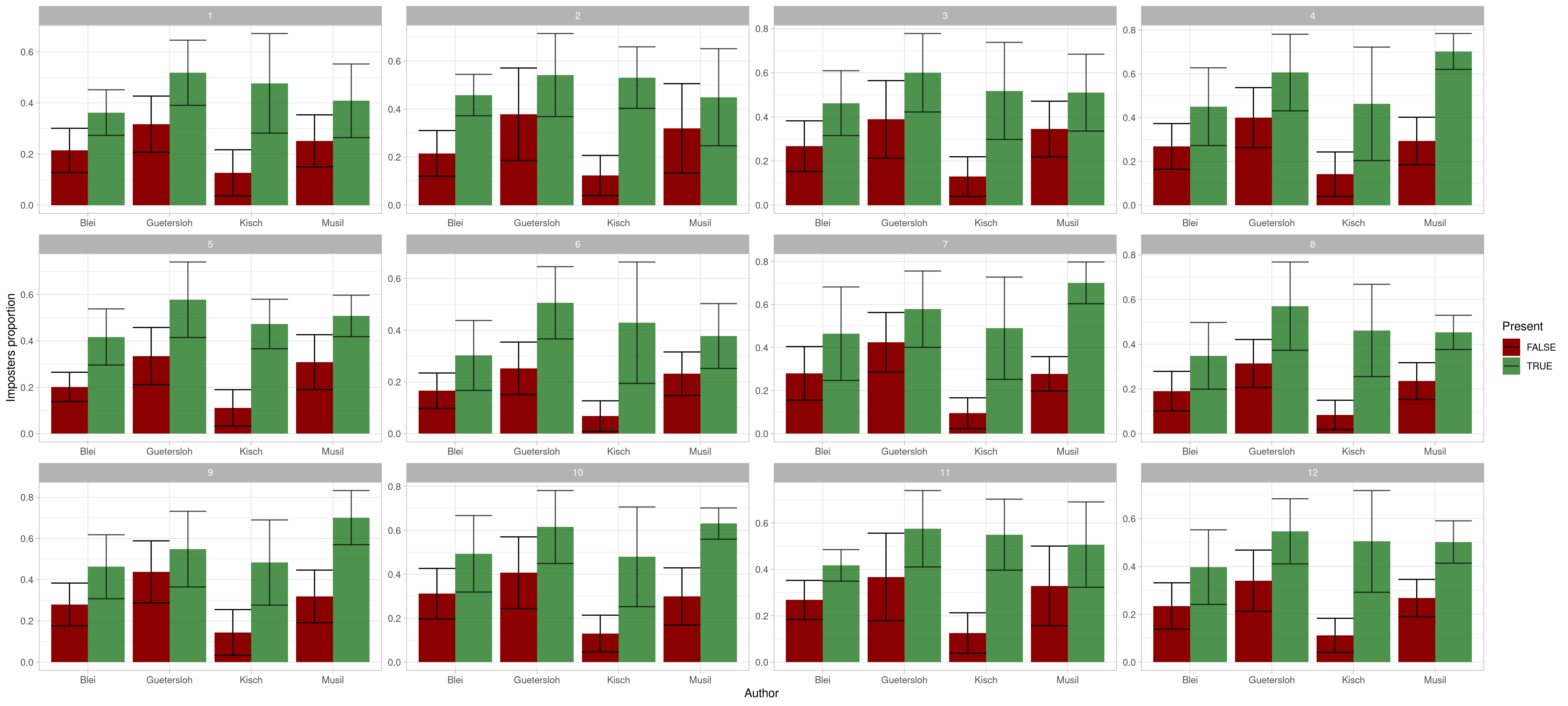
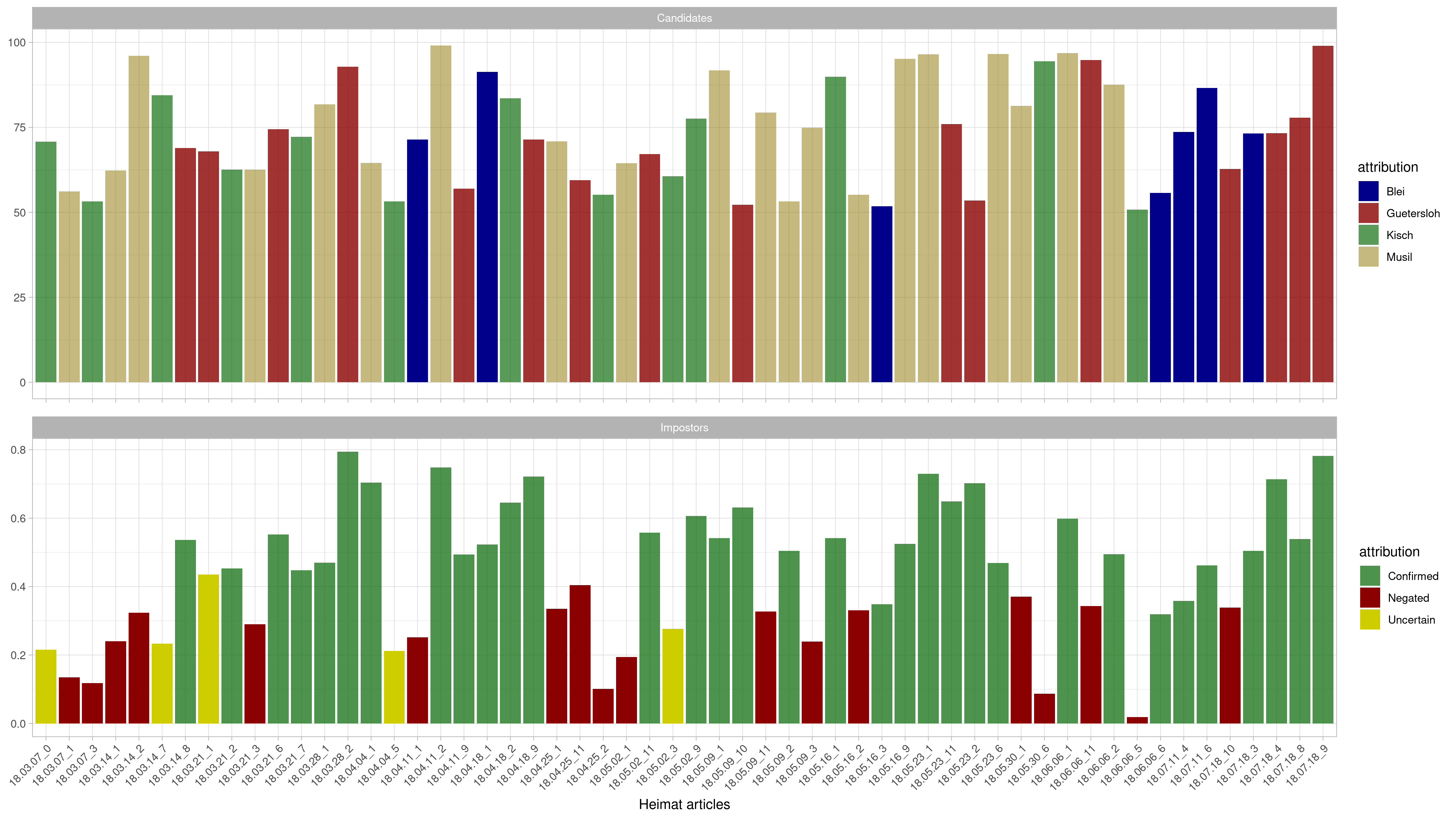
A deeper analysis was then run to identify the best group of impostors for the candidate authors. Figure 1 shows the final results of a series of analyses performed with 12 different (randomly-selected) groups of 16 impostors. The green and the red bars indicate the aforementioned score a and b respectively. Error bars indicate the scores’ standard deviations (in fact, 40 analyses were repeated ten times for each condition, using four distance measures and ten most frequent word selections). Ideally, for the impostors method to work perfectly on each candidate author, there should be no overlap between error bars. Figure 2 shows how the best-working group is the fifth, even though the method never works perfectly on Gütersloh.
Figure 1. Detailed quality scores for 12 groups of 16 impostors
Figure 2. Final results of the stylometric analysis
4. Results and discussion
Figure 2 shows the final results of our analysis. The upper section identifies the candidate author reaching the highest attribution percentage per text (but only texts with attribution percentages higher than 50% are visualized). The lower section shows the results of the impostors method on that author: the acceptance or rejection of an attribution depends on the comparison between the score and the error bars in Figure 1 (per author, in group 5).
These results cannot be considered definitive (in fact, they indicate just probabilities, with the above-mentioned reliability issues for specific authors). However, a comparison with biographical and historical data can highlight some interesting points of intersection. For example, on 7 March 1918 Martha Musil wrote that her husband’s collaboration with the KPQ was still uncertain (KA/Lesetexte/Bd. 18 Vorkriegs- und Kriegskorrespondenz/M. und R. Musil an A. Marcovaldi, 07.03.1918), and indeed no article was attributed to the writer before the following 28 March. Likewise, the first article attributed to Blei dates back to 18 April 1918, and his membership of the Editorial Group is attested only since 4 April (Reichel 2016: 192).
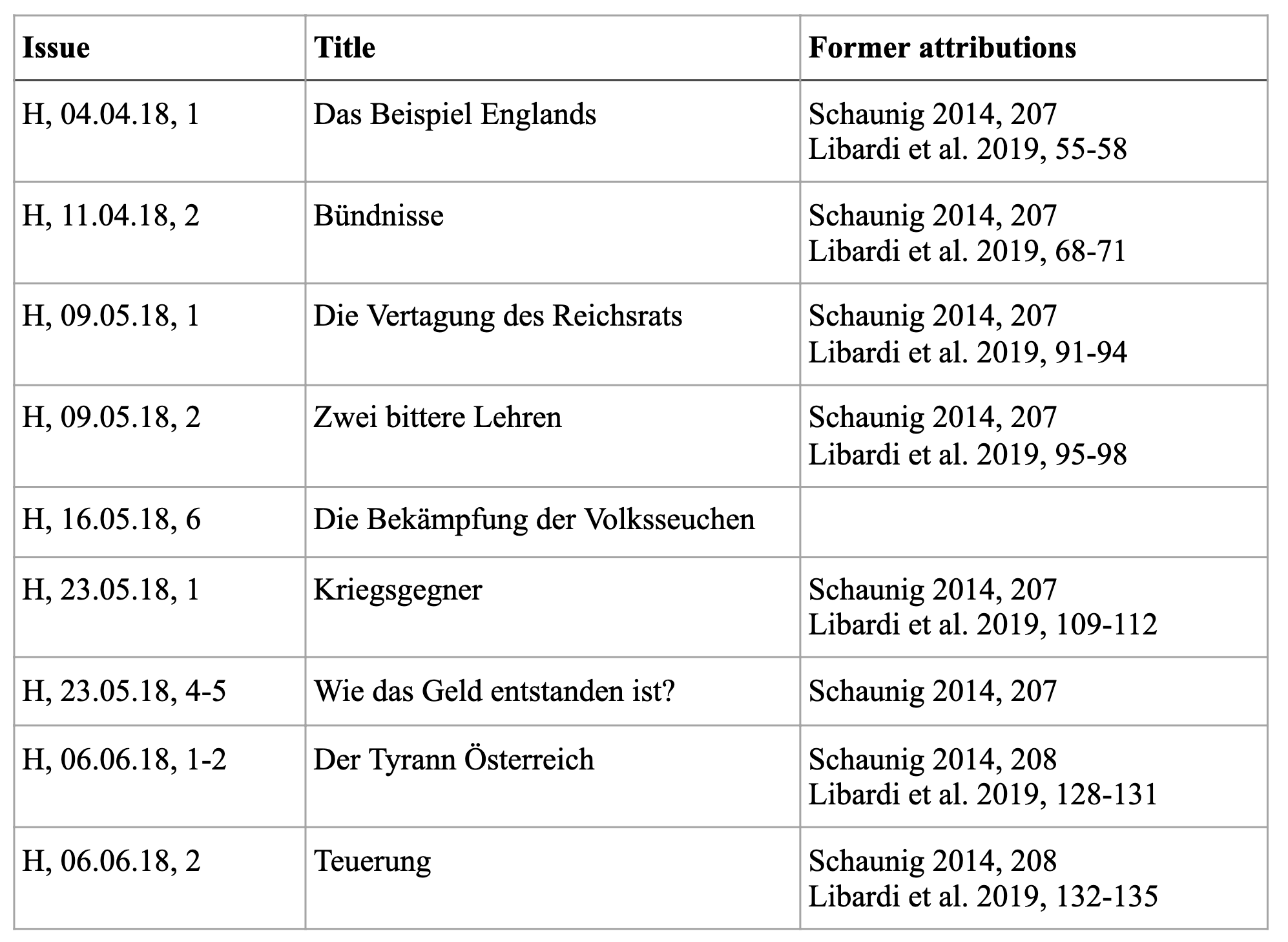
Moreover, if it is true that “one can only speculate on the specific organization of cooperative writing” in Heimat (Schaunig 2009: 222), authorship attribution could anyway shed some light on the task distribution among the editorial team members: as it was expected, indeed, our findings seem to confirm that most of the lengthy editorials on the front pages have been written by the chief editor Musil, thus supporting some of the attributions recently proposed by other scholars, as Table 3 shows.
Table 3. List of articles attributed to Musil (mean length of the texts in the test set: 740 words)
Finally, authorship attribution in Heimat could help to frame the authors’ individual stance within the context of the newspaper’s “collective forms of anonymous writing” (Schaunig 2009: 222). In this respect, Kisch’s case appears particularly interesting: a supporter of the Russian Revolution and later a promoter, together with Blei and Gütersloh, of the “Red Guard” in Vienna (Reichel 2016: 75), Kisch seems to have played a role in Heimat’s anti-Bolshevist propaganda (“Bolschewiki unter sich”, Heimat, 18.04.1918: 2-3), a fact that would complicate the author’s already problematic relation to his service in the KPQ.
Appendix A
Bibliography
Amann, Klaus / Corino, Karl / Fanta, Walter (eds.) (2009): Robert Musil. Klagenfurter Ausgabe [KA]. Kommentierte digitale Edition sämtlicher Werke, Briefe, und nachgelassene Schriften. Mit Transkriptionen und Faksimiles aller Handschriften. Klagenfurt: Robert Musil-Institut der Universität Klagenfurt.
Blei, Franz (1919a): “Aus Deutsch-Österreich”, in: Die Aktion col. 381–383.
Blei, Franz (1919b): “Ein Gespenst geht um in Europa”, in: Die Aktion, col. 175–179.
Blei, Franz (1930a): Formen der Liebe: Mit über 100 Abbildungen nach zeitgenössischen Originalen und Photographien sowie Farbtafeln. Berlin: Trianon-Verlag.
Blei, Franz (1930b): Männer und Masken. Berlin: Rowohlt.
Broucek, Peter (1989): “Das Kriegspressequartier und die literarischen Gruppen im Kriegsarchiv 1914– 1918”, in: Amann, Klaus / Lengauer Hubert (eds.): Österreich und der große Krieg 1914–1918. Die Andere Seite der Geschichte. Wien: Brandstätter 132–139.
Corino, Karl (1987): “Profil einer Soldatenzeitung aus dem Ersten Weltkrieg, Heimat, und ihres Herausgebers Robert Musil”, in: Musil-Forum. Studien zur Literatur der klassischen Moderne 13/14: 74–87.
Corino, Karl (2003): Robert Musil: eine Biographie. Reinbeck: Rowohlt.
Eder, Maciej (2017): “Short Samples in Authorship Attribution: A New Approach”, in: Digital Humanities 2017: Conference Abstracts. Montreal: McGill University, 221–224.
Eder, Maciej / Rybicki, Jan / Kestemont, Mike (2016): “Stylometry with R: A package for computational text analysis”, in: The R Journal 8, 1: 107–121.
Gschwandtner, Harald (2013): “Dienst und Autorschaft im Krieg. Robert Musil als Redakteur der Zeitschrift Heimat”, in: Musil-Forum. Studien zur Literatur der klassischen Moderne 33: 101–124.
Gschwandtner, Harald (2016): “Kriegspublizistik”, in: Nübel, Birgit / Wolf, Norbert C. (eds.): Robert-Musil-Handbuch. Berlin / Boston: de Gruyter 434–440.
Gütersloh, Albert P. (1918b): “Wer ist der Mörder?”, in: Die Rettung. Blätter zur Erkenntnis der Zeit 1, 2: 17–21.
Gütersloh, Albert P. (1918a): “Der Meisterbürger”, in: Die Rettung. Blätter zur Erkenntnis der Zeit 1, 4: 33–37.
Gütersloh, Albert P. (1991): Zur modernen Kunst: Essays. Wien: Deuticke.
Kisch, Egon E. (1976): “Schreib das auf Kisch! Ein Kriegstagebuch”, in: Uhse, Bodo / Kisch, Gisela (eds.): Egon E. Kisch. Gesammelte Werke in Einzelausgaben 1. Berlin: Aufbau-Verlag 163–411.
Kisch, Egon E. (1978): “Hetzjagd durch die Zeit”, in: Uhse, Bodo / Kisch, Gisela (eds.): Egon E. Kisch. Gesammelte Werke in Einzelausgaben 5. Berlin: Aufbau-Verlag 281–488.
Kisch, Egon E. (1975a): “Aus Prager Gassen und Nächten”, in: Uhse, Bodo / Kisch, Gisela (eds.): Egon E. Kisch. Gesammelte Werke in Einzelausgaben 2.1. Berlin: Aufbau-Verlag 7–203.
Kisch, Egon E. (1975b): “Prager Kinder”, in: Uhse, Bodo / Kisch, Gisela (eds.): Egon E. Kisch. Gesammelte Werke in Einzelausgaben 2.1. Berlin: Aufbau-Verlag 203–323.
Koppel, Moshe / Winter, Yaron (2014): “Determining if two documents are written by the same author”, in: Journal of the Association for Information Science and Technology 65, 1: 178–187.
Libardi, Massimo / Orlandi, Fernando (eds.) (2019): Robert Musil L’ultimo giornale dell’imperatore. Trento: Reverdito.
Reichel, Walter (2016): “Pressearbeit ist Propagandaarbeit”, in: Medienverwaltung 1914-1918: Das Kriegspressequartier (KPQ). Mitteilungen des Österreichischen Staatsarchivs. Sonderband / Österreichisches Staatsarchiv. Innsbruck: Studienverlag.
Rebora, Simone / Herrmann, J. Berenike / Lauer, Gerhard / Salgaro, Massimo (2019): “Robert Musil, a war journal, and stylometry: tackling the issue of short texts in authorship attribution”, in: Digital Scholarship in the Humanities 34, 3: 582–605.
Schaunig, Regina (2009): “Viribus unitis. Robert Musils Schreiben in kollektiver Anonymität”, in: Musil-Forum. Studien zur Literatur der klassischen Moderne 31: 202–223.
Schaunig, Regina (2014): Der Dichter im Dienst des Generals: Robert Musils Propagandaschriften im Ersten Weltkrieg. Mit zwei Beiträgen von Karl Corino und 87 Musil zugeschriebenen Zeitungsartikeln. Klagenfurt / Wien: Kitab.
Stamatatos, Efstathios (2009): “A Survey of Modern Authorship Attribution Methods”, in:
Journal of the Association for Information Science and Technology 60, 3: 538–556 DOI: <
https://doi.org/10.1002/asi.v60:3>.
Stamatatos, Efstathios /
Daelemans, Walter /
Verhoeven, Ben /
Juola, Patrick /
López, Aurelio /
Potthast, Martin /
Stein Benno (2015): “Overview of the author identification task at PAN 2015”, in:
Working Notes of CLEF 2015 - Conference and Labs of the Evaluation Forum. Toulouse: CEUR. <
http://ceur-ws.org/Vol-1391/inv-pap3-CR.pdf>.